
Sweet Cassava Starch vs. Tapioca Starch: The Guide to Brazilian Cassava Ingredients
Cassava—known in Brazil as mandioca, aipim, or macaxeira, and across North America as yuca—is one of the most important ingredients in Brazilian gastronomy. Often called our “White Gold,” this ancestral root possesses a culinary versatility that few foods in the world can match.
However, if you enjoy gluten-free baking or authentic Brazilian cuisine—especially our iconic Pão de Queijo (Brazilian cheese bread)—you have likely noticed a major labeling problem in US grocery stores. Ingredients derived from the cassava root are frequently grouped under generic, interchangeable names like Tapioca Starch, Tapioca Flour, or Cassava Flour.
In Brazil, where cassava has been a dietary cornerstone for centuries, these ingredients are never confused. Each one undergoes a distinct extraction, fermentation, hydration, or roasting process, resulting in completely different textures and baking behaviors.
At Vale do Sabor, our mission is not only to share tested recipes, but also to give you the technical confidence to choose the exact right ingredient. Here is everything you need to know to navigate US supermarket aisles and master each cassava derivative.
US Grocery Store Quick Guide: Matching the Label to Your Recipe
Before diving into how each ingredient is made and why it behaves differently in the oven, use this practical checklist when shopping in the United States so you always grab the right package:
- Sweet Cassava Starch (Polvilho Doce): In standard US grocery stores, look for “Tapioca Starch” or “Tapioca Flour” (e.g., Bob’s Red Mill, Anthony’s). Even though the US label says “tapioca,” the dry powder inside is pure Polvilho Doce. Use this for soft Pão de Queijo, gluten-free cakes, brownies, and cookies.
- Sour Cassava Starch (Polvilho Azedo): Rarely found in regular American baking aisles. Look for it at Brazilian markets, Latin grocery stores (such as Goya), select supermarkets like Publix, or online under “Polvilho Azedo,” “Sour Cassava Starch,” “Sour Tapioca Starch,” or “Sour Manioc Starch.” Use it for crispy, airy Pão de Queijo and Brazilian savory cheese puffs (Biscoito de Polvilho).
- Hydrated Tapioca (Goma de Tapioca): Sold in Brazilian/Latin markets and online as “Hydrated Tapioca Starch,” “Hydrated Tapioca Flour,” or “Tapioca Hidratada.” Use for Brazilian skillet crepes.
- Granulated Tapioca (Tapioca Granulada): Sold in regular US supermarkets as “Granulated Tapioca” as well as in Brazilian stores under brands like Yoki and Amafil. Use for puddings, chilled Bolo de Tapioca, and Dadinho de Tapioca.
- Large Tapioca Pearls (Pérolas de Tapioca / Boba): Larger chewy starch spheres made specifically for bubble tea drinks—not for puddings or baking.
- Whole Cassava Flour (Farinha de Mandioca Integral): Sold in US health aisles (e.g., Otto’s Naturals) simply as “Cassava Flour.” Great for tortillas, wraps, and dense batters, but should never replace Sweet Cassava Starch in Pão de Queijo.
- Toasted / Raw Cassava Flour (Farinha de Mandioca Torrada / Crua): Sold in Brazilian and Latin markets as “Farinha de Mandioca Torrada,” “Farinha de Mandioca Crua,” or “Coarse Toasted Yuca Flour.” Essential for Brazilian Farofa and Pirão.
1. Starches (Polvilhos / Féculas): Pure, Fiber-Free Elasticity
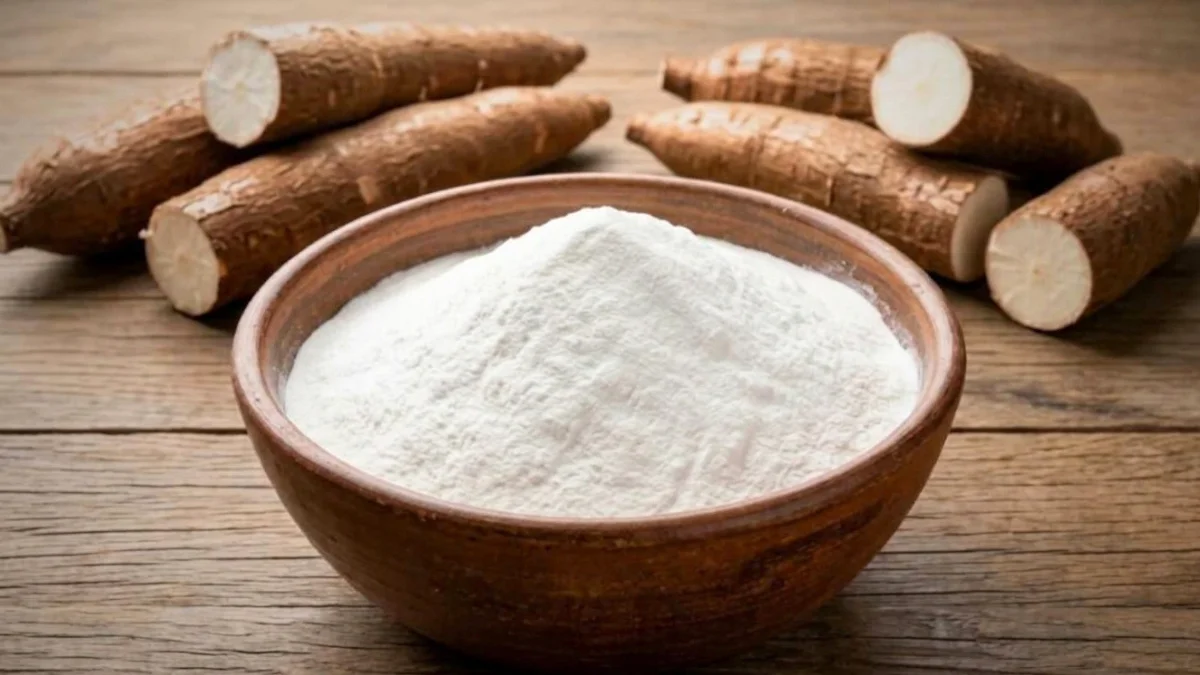
Cassava starches are pure white powders extracted solely from the starchy liquid of peeled, grated cassava roots—meaning 100% of the root’s fiber is removed. The key variable dividing this group is fermentation.
Sweet Cassava Starch (Polvilho Doce / Fécula de Mandioca)
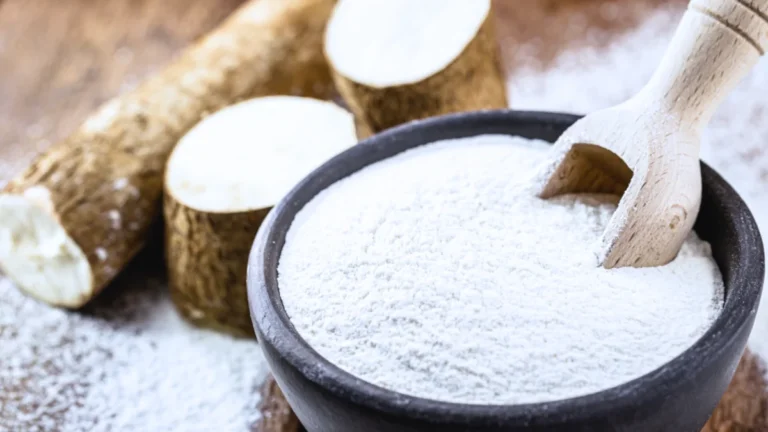
Sweet Cassava Starch is obtained by washing the grated root with water, letting the milky liquid settle (decantation), and drying the pure white starch without any fermentation.
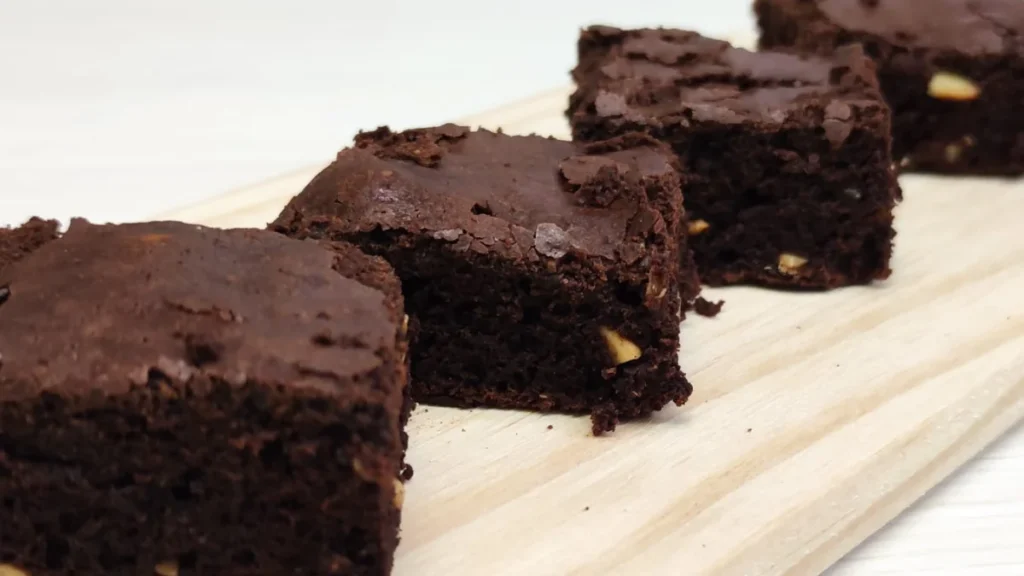
Image: Brownie Made with Sweet Cassava Starch
- Industrial vs. Artisanal terminology: In Brazil, Fécula de Mandioca refers to the industrial version dried instantaneously in modern flash-dryers (yielding an ultra-fine, standardized powder), while Polvilho Doce traditionally refers to naturally sun-dried starch. Technically and culinarily, they are the exact same unfermented starch.
- Culinary behavior: It acts as an essential structural binder in gluten-free baking. When hydrated and heated, its starch granules gelatinize to create cohesion, retain moisture, and produce a soft, tender, chewy interior.
Sour Cassava Starch (Polvilho Azedo)
Sour Cassava Starch begins the same way as sweet starch, but instead of drying immediately, the wet starch is left in tanks to undergo controlled natural fermentation for several weeks before being sun-dried.
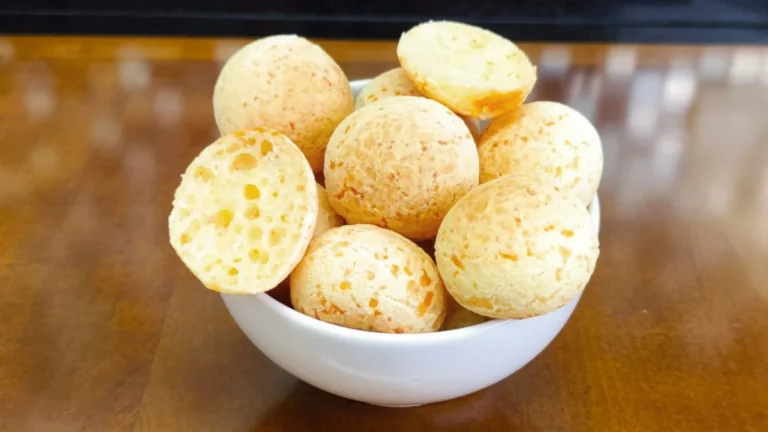
- Culinary behavior: Fermentation alters the starch molecules, creating a slightly coarser grain, a mildly tangy aroma, and—most importantly—natural leavening power. When exposed to oven heat, it expands without yeast or baking powder, producing an airy, hollow interior and a crisp, crunchy crust. It is essential for bakery-style Pão de Queijo and Brazilian savory cheese puffs (Biscoito de Polvilho).
Food Science Tip – Starch (Amido) vs. Fécula: In culinary science, both are plant carbohydrates, but terminology distinguishes their botanical source: Amido is extracted from above-ground grains (like corn or wheat), while Fécula is extracted from underground roots and tubers (like cassava and potato).
2. Cassava Flours: Fiber, Structure, and Crunch
Unlike starches, cassava flours utilize the solid pulp and dietary fiber of the root. Because they retain fiber, they absorb far more liquid than starches and behave completely differently in the kitchen.
Whole Cassava Flour (Farinha de Mandioca Integral)
Whole Cassava Flour is made by peeling, slicing or shredding, dehydrating, and finely grinding the entire cassava root—keeping its natural starch, pulp, and fiber completely intact.
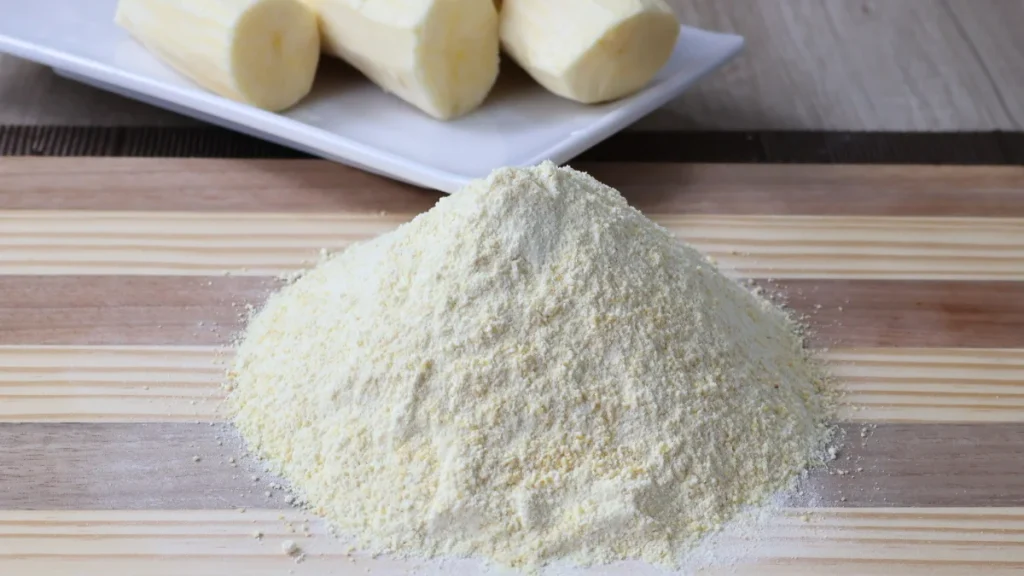
Image: Homemade whole cassava flour
- Culinary behavior: Because nothing is extracted, it acts like a whole-grain flour. It is heavier, slightly cream-colored, and absorbs significant moisture, providing firm structure rather than stretchy elasticity. This makes it a good gluten-free option for tortillas, wraps, and dense batters—for example, using it as the flour base in gluten-free gnocchi dough.
Traditional Brazilian Cassava Flour (Farinha de Mandioca Comum / Torrada)
Unlike whole cassava flour, this traditional Brazilian staple is made from the fibrous cassava pulp remaining after the starch liquid has been pressed out. Depending on how it is finished, it serves two distinct culinary purposes:
- Raw (Farinha de Mandioca Crua): Dried without heavy roasting, it retains enough residual starch to thicken liquids smoothly. In Brazil, it is stirred into hot fish, meat, or bean broths to make Pirão (a rich, savory Brazilian porridge).
- Toasted (Farinha de Mandioca Torrada): Slowly roasted in large pans or ovens until the fibers turn golden-beige and crisp. This crunchy meal is the essential base for Brazilian Farofa (toasted cassava flour sautéed with butter, onions, bacon, or eggs) and is sprinkled over Feijoada, grilled meats, and stews to add texture and absorb rich sauces without turning soggy.
3. Hydrated, Granulated & Pearl Tapioca: Moisture and Heat Transformations
This group shows how pure cassava starch transforms when combined with controlled water and heat—moving from skillet crepes to puddings and global beverages.
Hydrated Tapioca (Goma de Tapioca)
In Brazil, the word tapioca is the name of a very popular Brazilian dish—a thin, chewy crepe with lightly crisp edges cooked in a hot skillet—rather than dry sweet cassava starch (polvilho doce). Beyond the dish itself, the term also identifies two specific ingredients: hydrated tapioca starch (goma de tapioca, used to make this skillet crepe) and granulated tapioca (tapioca granulada), which we will cover next.
- Culinary behavior: Simply put, Goma de Tapioca is Sweet Cassava Starch (Polvilho Doce) hydrated with water and sifted into a soft, damp powder with gentle clumps. Its defining trait is instant gelatinization: when sprinkled onto a hot, dry skillet, the moist starch granules fuse together in under two minutes to form a chewy, translucent, naturally gluten-free crepe—requiring zero oil, butter, or eggs.
Granulated Tapioca (Tapioca Granulada)
Granulated Tapioca is produced by heating moist cassava starch so it forms small, hard, irregular dry granules that are partially pre-cooked.
- Culinary behavior: Because these granules are dense and dry, they do not dissolve in cold liquids. Instead, they must be soaked or simmered in warm milk or coconut milk, slowly absorbing liquid until they swell into soft, translucent, al dente pearls. They are essential for American tapioca pudding, fruit pie thickeners, chilled Brazilian tapioca cake (Bolo de Tapioca), Cuscuz de Tapioca, and crispy cheese cubes (Dadinho de Tapioca).
Large Tapioca Pearls (Pérolas de Tapioca / Boba)
Molded from cassava starch into larger uniform spheres and pressure-cooked (often darkened with brown sugar or caramel), Tapioca Pearls develop a dense, chewy texture designed specifically for Bubble Tea drinks—not for baking or traditional puddings.
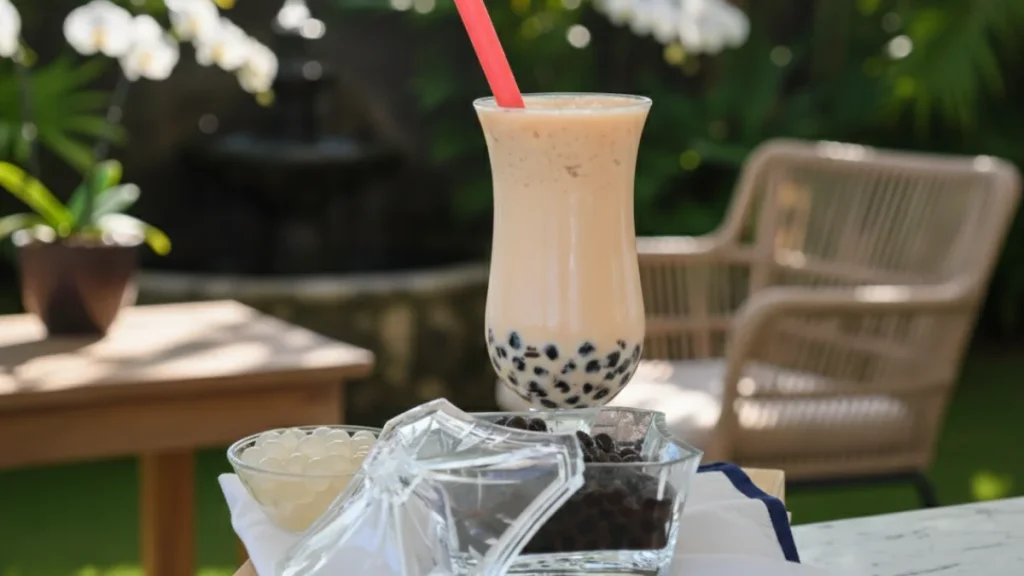
Image: Bubble Tea drinks
Quick Comparison Table: Essential Cassava Ingredients
| Brazilian Name | Accurate English Term | What It Is Made Of | US Grocery Store Label | Best Culinary Use |
|---|---|---|---|---|
| Polvilho Doce / Fécula | Sweet Cassava Starch | Pure extracted root starch (unfermented, dry) | Tapioca Starch or Tapioca Flour | Soft Pão de Queijo, gluten-free cakes, brownies |
| Polvilho Azedo | Sour Cassava Starch | Pure extracted root starch (fermented, dry) | Polvilho Azedo or Sour Cassava Starch | Crispy, airy Pão de Queijo, Brazilian savory cheese puffs (Biscoito de Polvilho) |
| Farinha de Mandioca Integral | Whole Cassava Flour | Whole peeled root sliced or shredded, dehydrated, and finely ground (with fiber) | Cassava Flour (e.g., Otto’s) | Tortillas, wraps, dense flatbreads, gnocchi dough |
| Farinha de Mandioca Torrada / Crua | Toasted / Raw Cassava Flour | Pressed fibrous root pulp (toasted or raw) | Farinha de Mandioca / Toasted Yuca Flour | Traditional Brazilian Farofa, Pirão, stew topping |
| Goma de Tapioca | Hydrated Tapioca Starch | Sweet cassava starch hydrated with water | Hydrated Tapioca Starch / Goma de Tapioca | Brazilian skillet crepes (the traditional Brazilian dish called Tapioca) |
| Tapioca Granulada | Granulated Tapioca | Moist starch heat-formed into hard dry bits | Granulated Tapioca | Puddings, chilled Bolo de Tapioca, Dadinho de Tapioca |
Frequently Asked Questions (FAQ) – Sweet Cassava Starch vs. Tapioca Starch: The Guide to Brazilian Cassava Ingredients
1. Can I use US Tapioca Starch when a recipe calls for Sweet Cassava Starch?
Yes. In the United States, dry Sweet Cassava Starch (Polvilho Doce) is commercially sold as Tapioca Starch or Tapioca Flour. At Vale do Sabor, we use the accurate culinary term Sweet Cassava Starch to honor its origin and avoid confusion with hydrated tapioca, while guiding you to the exact dry product on US shelves.
2. Are Tapioca Starch and Tapioca Flour the same thing in the US?
Yes. In American supermarkets, manufacturers use “Tapioca Starch” and “Tapioca Flour” interchangeably on packaging. Both refer to the dry, unfermented starch extracted from the cassava root.
3. Can I substitute Whole Cassava Flour for Sweet Cassava Starch in Pão de Queijo?
No. Whole Cassava Flour (Farinha de Mandioca Integral) contains the entire root’s fiber and absorbs much more liquid. Using it in Pão de Queijo will result in a heavy, dense dough instead of a stretchy, airy cheese bread.
4. Can I use Whole Cassava Flour to make Brazilian Farofa?
No. Authentic Farofa requires coarse, pan-toasted cassava meal (Farinha de Mandioca Torrada), which stays crisp and granular when sautéed with butter and seasonings. Finely ground Whole Cassava Flour turns pasty rather than crunchy.