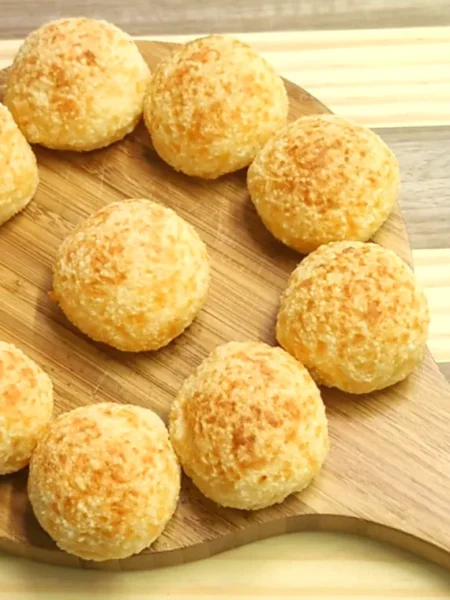

The difference in this Minas Gerais version of the Brazilian cheese bread begins with the measuring method: in this region, many use a glass cup (requeijão cup) to measure liquids, and the quantity of eggs is added until the dough reaches the desired consistency. Another difference is the cheese, with Meia Cura being the traditional choice.
I describe the preparation using a glass cup of 220 ml (requeijão cup) as a measurement; however, for those who prefer using grams, I have also included all weights in the ingredients list. This way, everyone can make this recipe for the Brazilian cheese bread, regardless of the chosen measuring method!
We know that finding authentic Meia Cura cheese from Minas Gerais outside of Brazil can be a challenge. If you cannot find it, don’t worry: you can use cured cheese, grated or shredded, to make this recipe, and the outcome will also be wonderful!
The final product is a Brazilian cheese bread with a more aerated center, crunchy on the outside, and with greater expansion capacity.
Throughout the post, I will mention the yield, and at the end, I will show you how to freeze them correctly.
Come back often; this corner is all yours! Until the next delight! 🤗✨
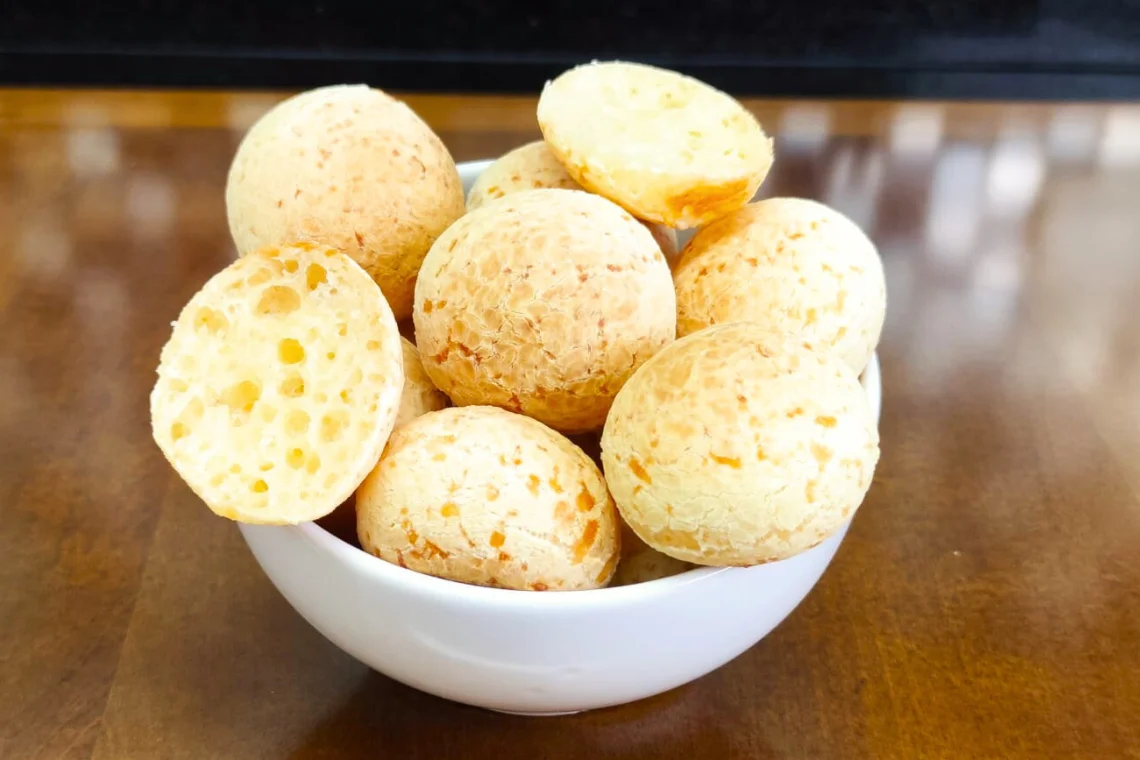

Brazilian Cheese Bread Recipe from Minas Gerais
Ingredients
Preparation Method (Instructions)
Using a glass cup of 220 ml (requeijão cup), fill it with milk until it is slightly above the middle (or weigh 140 g of milk) and complete it with water until the glass is full (or weigh 80 g of water). Pour this liquid into a saucepan.
Next, fill the glass cup of 220 ml (requeijão cup) halfway with oil (or weigh 110 g of oil) and add it to the mixture in the saucepan, along with the salt. Mix well and bring to a boil.
- Place the Sour Cassava Starch in a bowl and pour the boiling liquid over it. Mix until all the liquid is incorporated into the starch, forming a crumbly texture (farofa).
Let the mixture cool until it reaches a temperature below 50°C (122°F). It is important that this mixture is not hot, so as not to interfere with the action of the eggs; once it feels lukewarm, you can proceed with the recipe.
Beat the eggs and add them to the mixture. In this recipe, the egg determines the final consistency, so do not add everything at once. Add a portion, mix, and then add more gradually.
- Turn the dough onto a flat surface to knead. If you prefer, you can knead it in the bowl itself; however, kneading on a flat space is more practical.
While kneading, the dough may stick to the counter; to prevent this, you can previously line the counter with a silicone mat.
Add the cured cheese or semi-cured cheese (grated or shredded) to the dough in three stages, mixing well between each addition.
Preheat the oven to 180°C (356°F) for 10 to 15 minutes.
- Shape the dough into small balls; it is not necessary to grease your hands with oil for molding. Arrange the dough on a baking sheet; it is also not necessary to grease the pan.
Bake at 180°C (356°F) for approximately 30 minutes, or until golden brown. Then, simply serve and enjoy this delicious Brazilian cheese bread.
- To Freeze: If you wish to set aside part of the dough to freeze, shape the balls, place them in a rectangular pan, and cover with plastic wrap.
- Place in the freezer and wait until the balls are frozen.
Then, simply transfer the cheese bread balls to a plastic bag and keep them in the freezer. Bake them whenever you want to enjoy a delicious Brazilian cheese bread.
Watch the video to see the step-by-step recipe for Brazilian Cheese Bread from Minas Gerais. English dubbing available; to activate, click the Settings icon and select 'Audio track'.

Note
1 - For those who do not have a kitchen scale, use a 220 ml reference (such as a measuring cup) for all liquids.
2 - The process of adding the cheese in multiple stages during the preparation of the Brazilian Cheese Bread ensures a unique distribution and an enhanced texture:
- By dividing the cheese, it incorporates gradually into the dough. The portions added in the initial stages blend completely, providing rich flavor in every single bite.
- Meanwhile, the cheese added in the final stages will leave small fragments throughout the dough, giving the cheese bread a much more attractive appearance after baking.
- Furthermore, when tasting, these remaining bits provide a richer sensory experience, allowing you to better appreciate the distinct flavor of the cheese at different moments.
For more delicious gluten-free options and traditional details, visit our full recipes page: valedosabor.com/recipes